 |
Your travel guide to Kerala, South India
Karkidaka Vavu Bali: Witness One of Kerala's Most Sacred Traditions
Far from being a tourist event, Vavu Bali is a deeply spiritual tradition that has united Kerala's families for centuries. It is a moving expression of remembrance, gratitude, and faith that offers visitors a rare glimpse into the living cultural heritage of South India.
What Is Karkidaka Vavu Bali?
Karkidaka Vavu Bali is an annual Hindu ritual performed on Amavasya, the new moon day of the Malayalam month of Karkidakam. On this sacred day, thousands of families gather to honor their departed ancestors through prayers and symbolic offerings.
According to Hindu beliefs, these rituals help bring peace to the souls of deceased family members and strengthen the spiritual bond between generations. It is a day devoted to remembrance, reflection, and respect for those who came before us.
Unlike standard commemorations based on individual death anniversaries (determined by the *Nakshatra*), *Vavu Bali* allows for paying homage to all generations of ancestors simultaneously.
*Orikkal* is a rigorous traditional practice observed on the eve of *Karkidaka Vavu Bali*: the person performing the ancestral rites (*Bali Tharpanam*) consumes only a single rice-based meal. This ritual purification prepares the mind and body to honor departed ancestors during the new moon of the month of Karkidakam (Malayalam calendar).
Key practices of *Orikkal* and *Vavu Bali*:
The person officiating the ritual consumes only one rice-based meal on the eve of *Vavu Bali*. They completely abstain from non-vegetarian food, intoxicants, and any additional meals.
During the *tarpanam*, *darbha* grass and a *pavithram* ring are used
Across Kerala, rivers, beaches, and temple grounds become places of quiet devotion as families perform ceremonies that have remained largely unchanged for generations.
The Ceremony
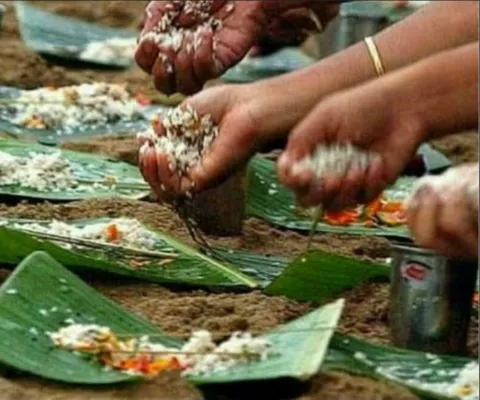
Before sunrise, devotees arrive dressed in simple traditional clothing, carrying the items needed for the ritual. The offerings typically include:
-
Cooked rice
-
Water
-
Black sesame seeds
-
Sacred herbs such as cheroola
These offerings are carefully arranged on a banana leaf while prayers are recited under the guidance of temple priests or family elders.
The ceremony concludes with the offerings being immersed in a flowing river or the sea, symbolizing the completion of the prayers and the peaceful journey of the departed souls.
Despite the large crowds, the atmosphere remains calm, respectful, and deeply emotional.
The Best Places to Witness Vavu Bali
Thousands of devotees gather across Kerala, but several locations are especially renowned for the scale and spiritual significance of the ceremonies.
Aluva Mahadeva Temple
Located on the banks of the Periyar River, the Aluva Mahadeva Temple hosts one of Kerala's largest Vavu Bali gatherings. Before dawn, the riverbank fills with thousands of families performing rituals together in an unforgettable display of devotion.
Papanasam Beach
The name Papanasam means "the destruction of sins," making this beach a particularly sacred location for ancestral prayers. The combination of the Arabian Sea, morning light, and solemn ceremonies creates a unique spiritual atmosphere.
Thirumullavaram Beach
Near Kollam, this beautiful beach becomes an important pilgrimage site every year, attracting devotees from across southern Kerala.
Other Important Pilgrimage Sites
Other respected locations include:
-
Thiruvallam Sree Parasurama Swamy Temple
The Legend of Parasurama and Ancestral Rites – Creator of the Land:
According to mythology, Parasurama created Kerala by hurling his divine axe across the sea to reclaim land from the waters.
After his battles, Parasurama performed penance and ancestral rites (*Pitrukarma*) at Thiruvallam, on the banks of the Karamana River, to attain spiritual redemption.
The Thiruvallam Sree Parasurama Swami Temple remains one of the most revered sites for performing *Bali Tharpanam*; offerings of rice, sesame seeds, and sacred water are believed to bestow eternal peace and *moksha* (liberation) upon ancestors.
-
Thirunavaya Navamukunda Temple
-
Thirunelli Mahavishnu Temple in Wayanad
-
Numerous riversides, temple ponds, and coastal villages throughout Kerala
Each destination offers its own unique atmosphere while sharing the same spirit of remembrance and devotion.
A Meaningful Cultural Experience for Travelers
For international visitors, witnessing Karkidaka Vavu Bali offers much more than an opportunity to observe a religious ceremony. It provides a genuine encounter with Kerala's living traditions and family values.
Unlike staged cultural performances, this is an authentic community event where local families gather to honor their ancestors with dignity and humility.
Visitors are welcome to observe respectfully from a distance. To ensure a positive experience, it is recommended to:
-
Wear modest clothing that covers shoulders and knees.
-
Maintain silence during prayers.
-
Avoid using flash photography.
-
Ask permission before photographing individuals.
-
Follow instructions from temple authorities and volunteers.
Showing respect for local customs allows visitors to appreciate the ceremony while preserving its sacred character.
When Does It Take Place?
Karkidaka Vavu Bali is celebrated once each year on the new moon day (Amavasya) during the Malayalam month of Karkidakam, usually falling between July and August. As the exact date changes annually according to the lunar calendar, travelers planning to witness the ceremony should check the festival dates before visiting Kerala.
Discover Kerala Beyond Its Landscapes
Kerala is celebrated worldwide for its backwaters, wildlife, hill stations, Ayurveda, and beaches. Yet its greatest treasure may be its living traditions, preserved through generations with remarkable devotion.
Witnessing Karkidaka Vavu Bali offers a deeper understanding of Kerala—not only as a beautiful destination, but as a place where spirituality, family, and cultural heritage remain an essential part of everyday life.
For travelers seeking authentic cultural experiences, this remarkable ceremony is one of the most meaningful moments they can experience in South India.